
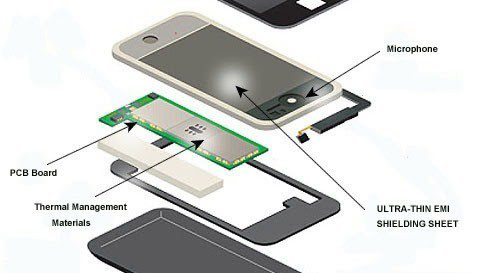
The Global thermal management technologies market is heading from roughly 19.8 billion dollars in 2025 to 30 billion dollars by 2030, growing at 8.6 percent compounded annually. Inside that, thermal interface materials, especially thin films, pads, and graphite sheets used in consumer electronics, are expanding even faster, with most analysts pegging the segment CAGR between 10 and 12 percent through 2033. Smartphones, laptops, tablets, and wearables already account for more than half of total TIM demand, and consumer electronics held about 48 percent market share in recent reports.
I got a call at 7:15 this morning from a materials manager at a West Coast supplier who sounded like he had not slept in days.
His voice cracked when he said, “Angelo, our thermal film orders for next-gen laptops and flagship phones just jumped 42 percent in the last quarter alone. We are turning away new business because we cannot find application engineers who actually understand heat dissipation in devices thinner than a credit card.”
That one sentence told me everything.
Consumer electronics are getting ridiculously powerful and ridiculously thin at the same time. Think AI-enabled laptops with chips that now push 45 to 65 watts in a chassis that is only 13 millimeters thick.
Foldable phones that fold 200,000 times in testing but still have to stay under 40 degrees Celsius so the battery does not swell.
Gaming handhelds that throttle after six minutes of 4K play if the thermal film is even 0.05 millimeters too thick.
The little things kill you in this market.
One supplier I worked with lost a $14 million annual contract last year because their competitor’s graphite film shaved 0.3 millimeters off the stack height and dropped skin temperature by 4 degrees during a 30-minute benchmark. That tiny difference meant the device could sustain full performance 18 percent longer without fans spinning up and draining the battery. Customers noticed. Orders shifted overnight.
The numbers behind the frenzy are real and accelerating. The global thermal management technologies market is heading from roughly 19.8 billion dollars in 2025 to 30 billion dollars by 2030, growing at 8.6 percent compounded annually. Inside that, thermal interface materials, especially thin films, pads, and graphite sheets used in consumer electronics, are expanding even faster, with most analysts pegging the segment CAGR between 10 and 12 percent through 2033. Smartphones, laptops, tablets, and wearables already account for more than half of total TIM demand.
Why the surge right now? AI workloads, 5G mmWave antennas, high-refresh OLED panels, and ultra-fast charging all generate concentrated heat in spaces where traditional heat sinks simply will not fit. Engineers tell me they are now designing around 0.1-millimeter tolerances. A film that conducts 1,800 watts per meter-kelvin instead of 1,200 can be the difference between a device that feels cool to the touch and one that burns your lap after 20 minutes.
The problem is the talent pool is tiny.
Most application engineers I talk to know either the material science side or the actual device integration side. Very few have done both in high-volume consumer programs. The ones who have, the ones who can walk into a design review and say, “Swap this phase-change film for this hybrid graphite laminate and you will gain 12 percent more sustained performance without adding weight,” those people get calls from three different companies the same week.
I placed three of them in the last 180 days. One went to a laptop maker in California who immediately redesigned a cooling stack and won back shelf space at a major retailer. Another joined a wearable medical device team in Minnesota and cut their prototype thermal failures by 65 percent in the first month.
If your operation supplies consumer electronics thermal management films, laminated heat spreaders, graphite sheets, or EMI shielding materials that double as thermal layers, you already know the pressure. The window to capture market share is narrow, and the right engineer closes that window fast.
Reach out if you are short on that talent. I keep a short list of proven thermal film application engineers who understand the little things that actually matter in a 13-millimeter laptop or a foldable phone.
I’ve been watching this market “heat up” for years. The demand is not slowing down. The question is whether your team will be ready when the next order surge hits.
I know I’ll be ready to find the right talent for your team. Contact me to discuss if you need help with these types of issues.
Wishing you all the best. Cheers!